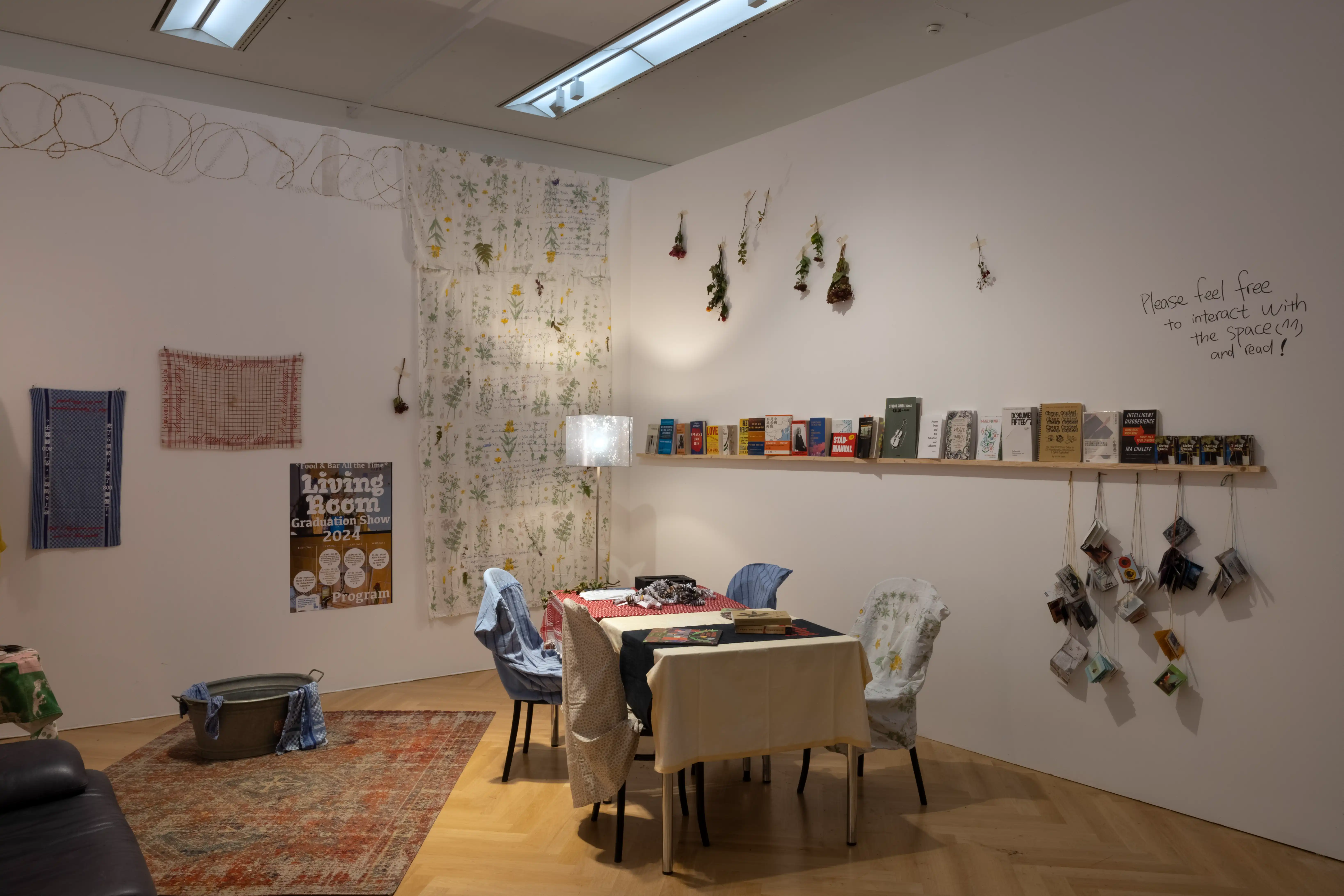
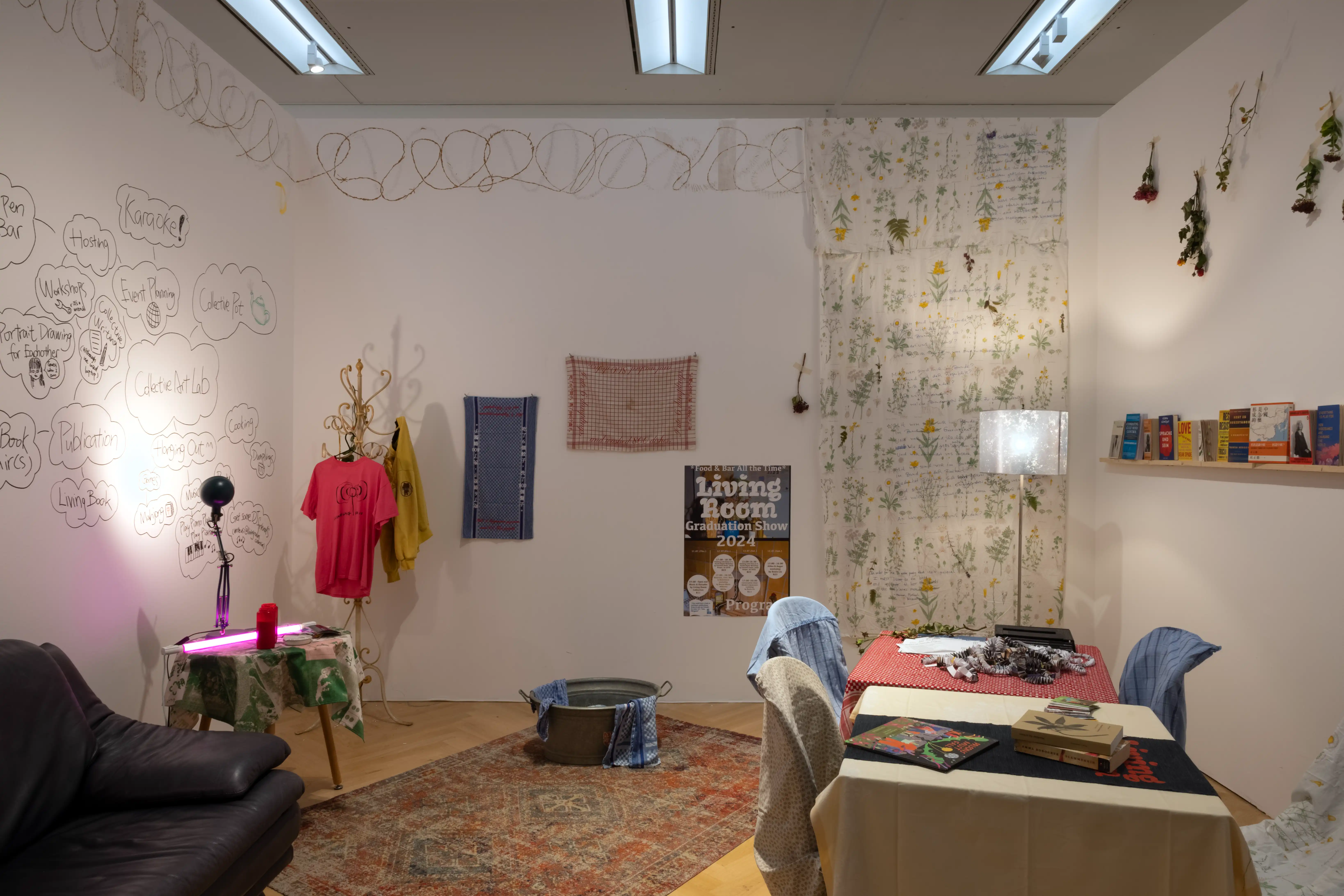
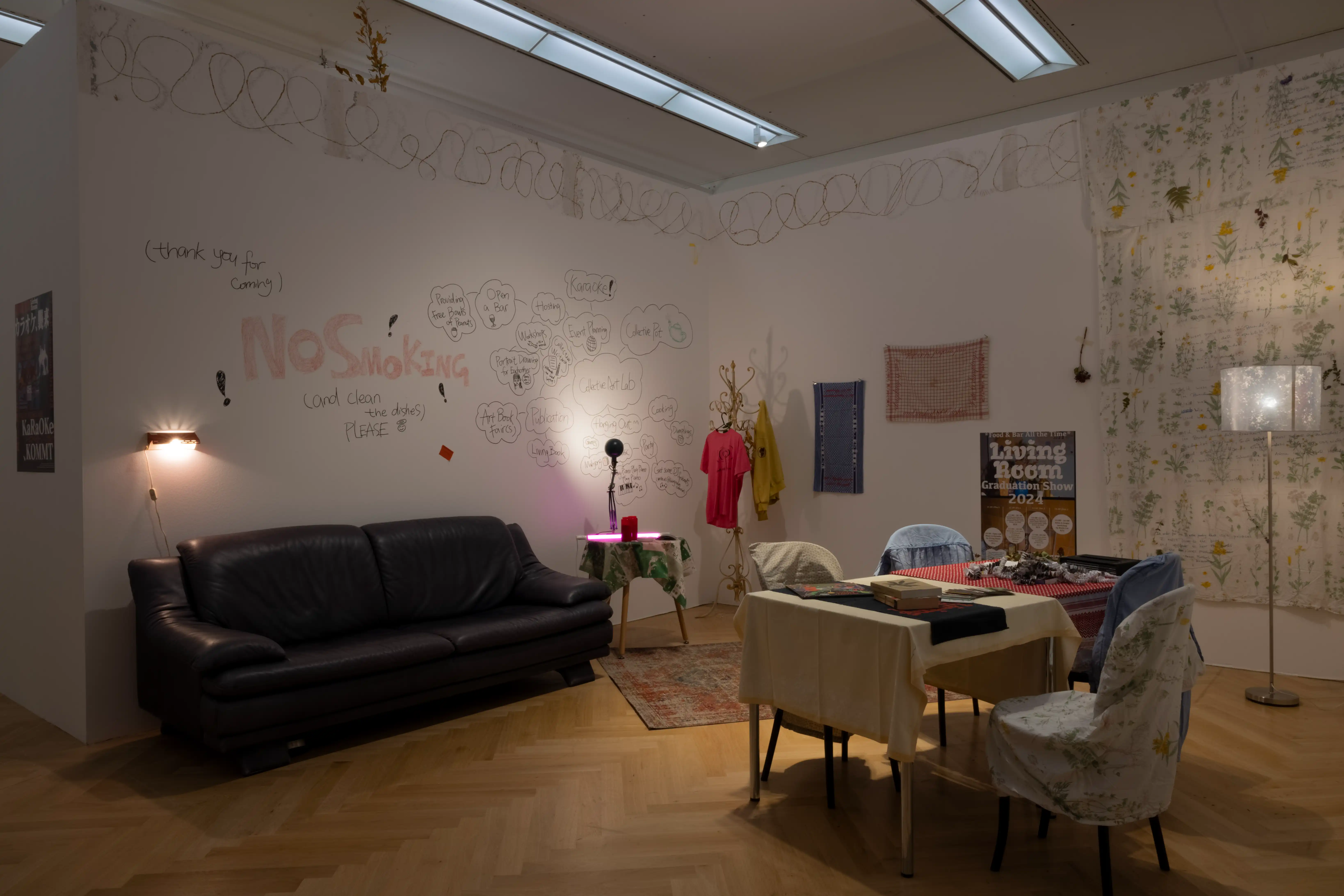
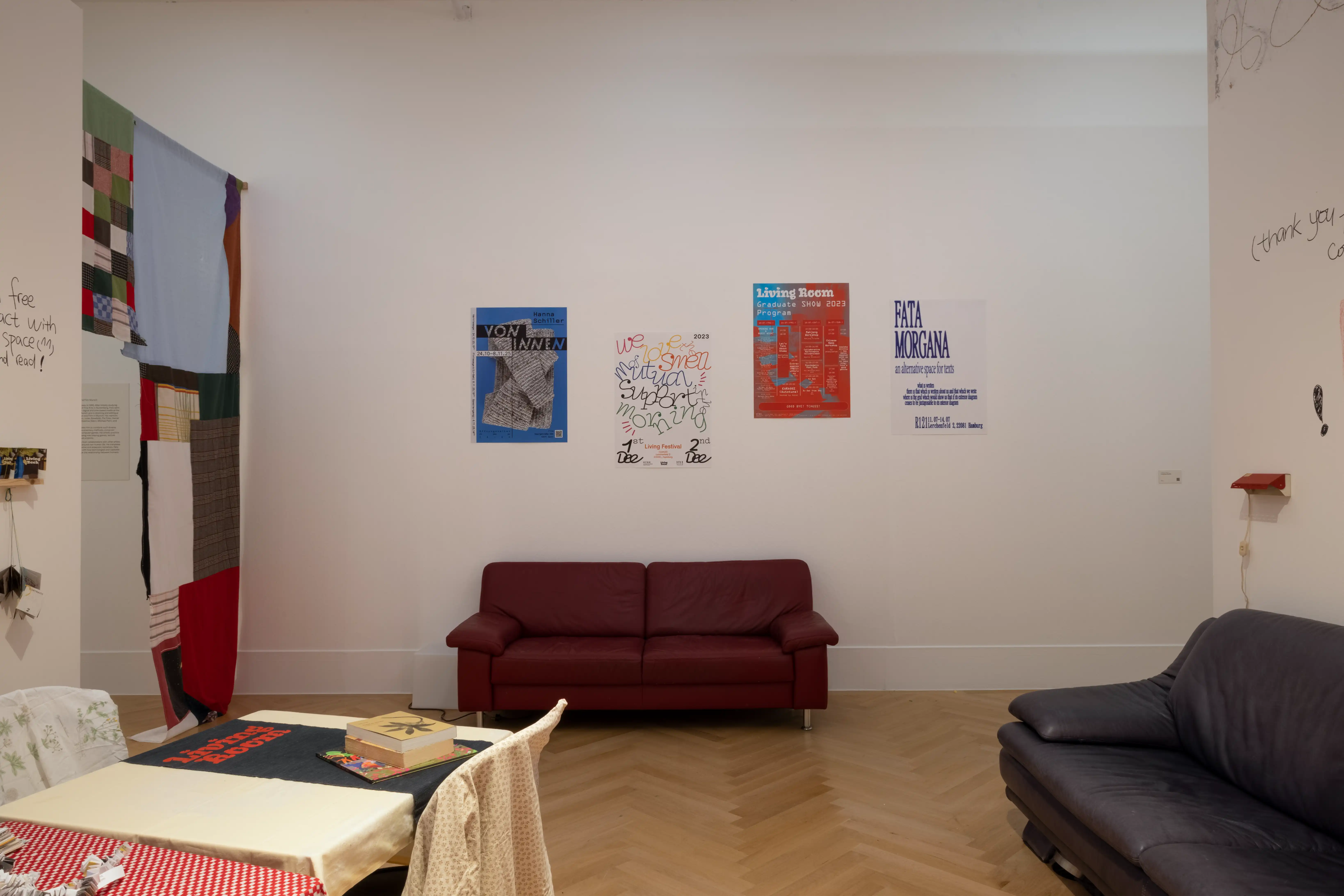
I co-founded Living Room (a list of members could be found on our instagram page), an art collective, in Hamburg in 2022, led by the collective practices of Reza Afisina and Iswanto Hartono from ruangrupa. Our approaches colide together where we work with others on relational aesthetics, collective hosting and experimental publishing.
As a core member of the group, I focus on leading events, curating gatherings and developing publications as platforms for exchange.
In 2023, we compiled and published a collection of 14 zines, later presented at several art book fairs.
For me, Living Room is less a project than a way of inhabiting a space together. It contains care, hospitality, and creating a flexible framework where conversations and collaborations but also the unexpected and conflicts could happen. Through maintaining a space, cooking, working and inviting others to join us, we build a space where learning is shared rather than taught.
Earlier 2025, Living Room was awarded the German Federal Award for Art Students. With one large-scare installation at the Bundeskunsthalle in Bonn, decided to close its chapter of the collective.
I, however, will cherish these past three years deeply in my heart forever and again with all the gratitude.